Today we’ll head back to the Poljička Planina mountain range, which was featured in one of our previous articles. We’ll visit the part of the range that “towers” over the Croatian villages of Strožanac, Žminjača, and Žrnovnica near Split. This is the Perún mountain massif.
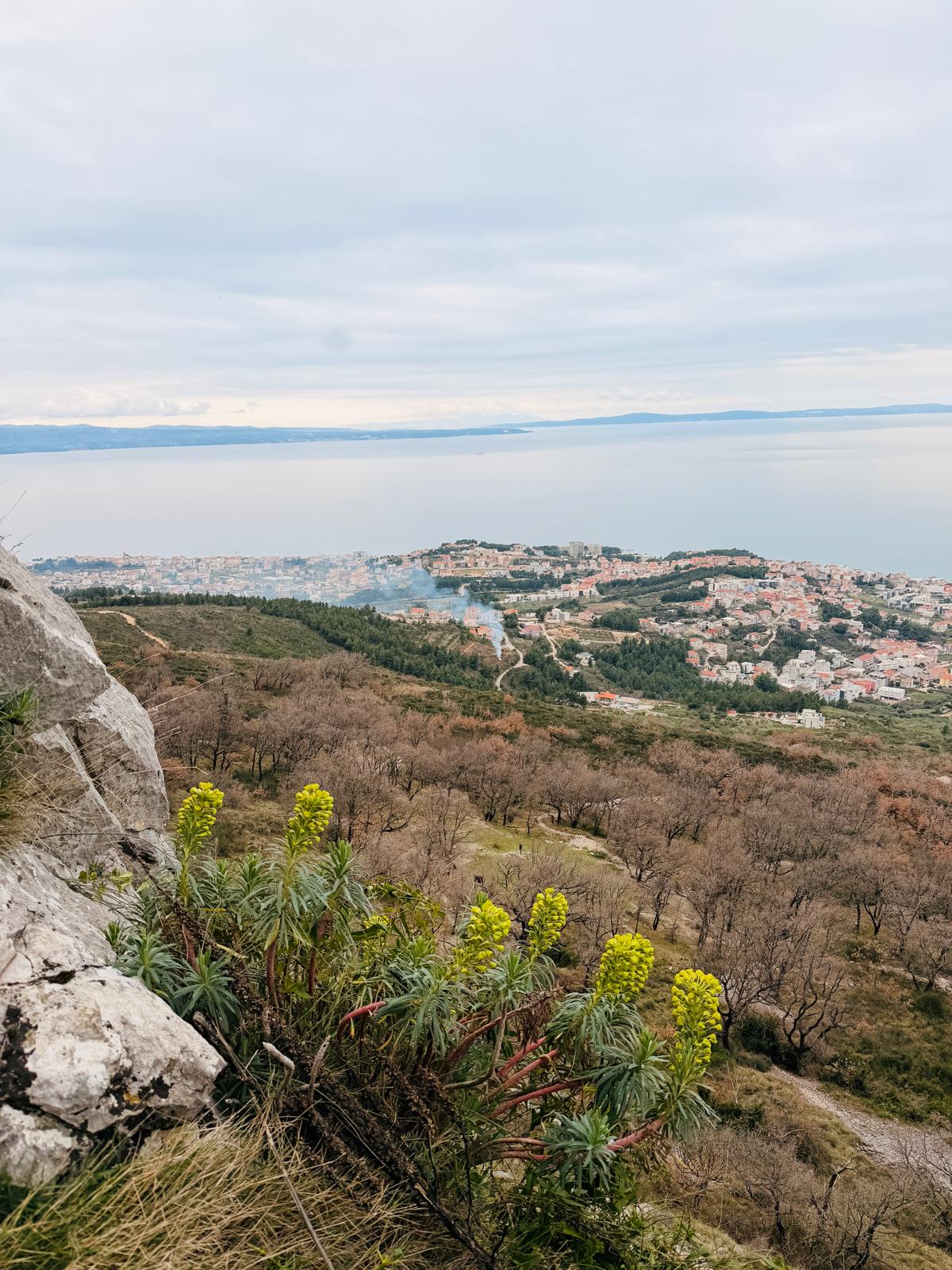


It is one of the best-documented Old Slavic sacred sites in Croatia. At the top of Perunsko Hill (441 m), there are remains of a pre-Slavic (Illyrian) semicircular fortified settlement. And it was this place, steeped in history, that I decided to visit.


There are three routes leading to the summit of Perunsko Hill—from Strožanac, from the direction of the village of Gornja Podstrana, and from Vilar.
*My route from Strožanac*
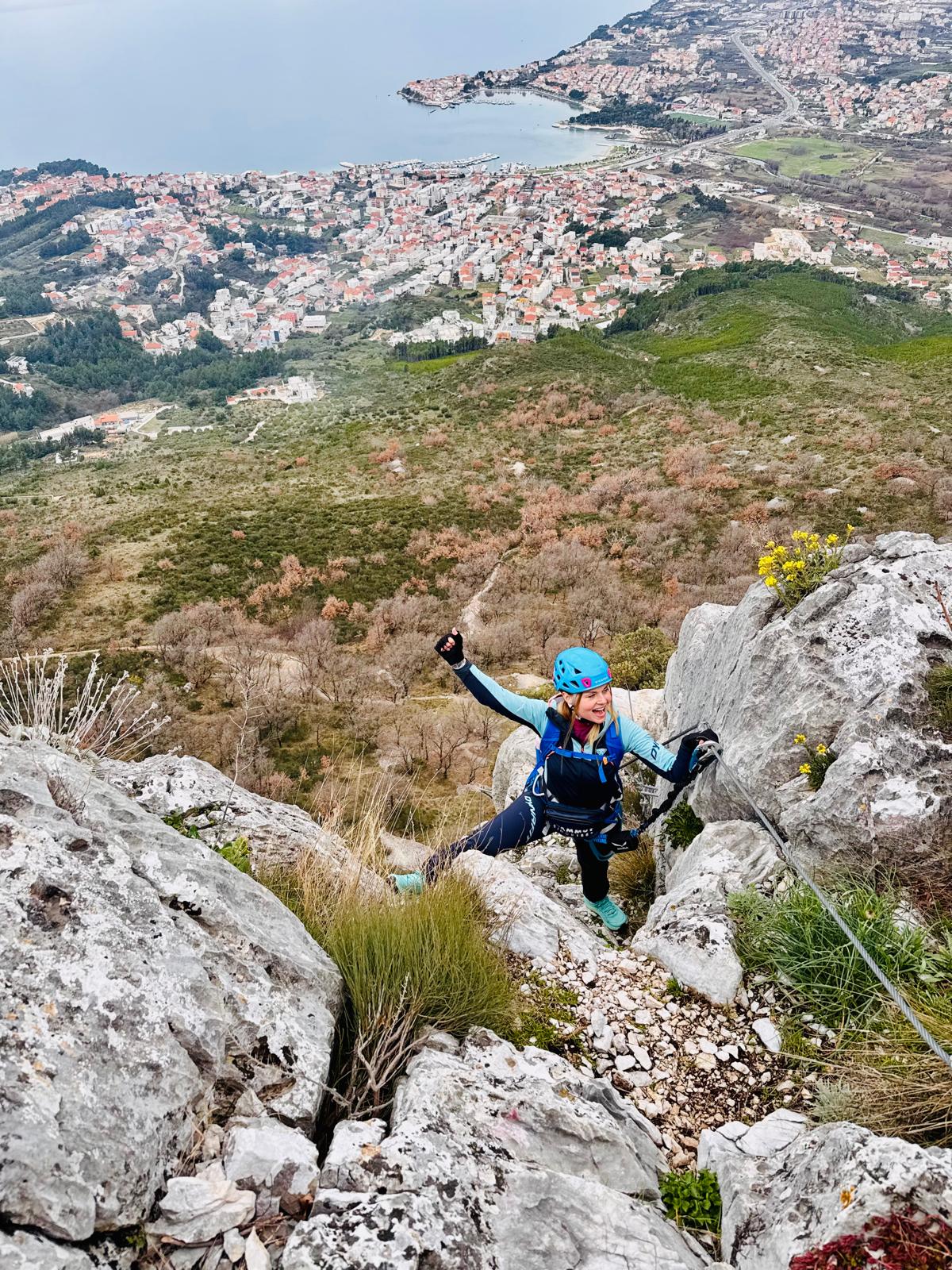
I chose this route mainly because you can enhance your hiking experience by climbing the Perunika via ferrata to the mountain ridge. It is rated as a Category C route, measuring 280 meters in length with an elevation gain of 140 meters.

And so, one February morning, I parked in the village of Strožanac Gornji and set off toward the start of the via ferrata. After 100 meters, I turned right uphill onto a concrete road, which ended after 150 meters and gave way to a hiking trail. After about 300 meters, I found myself on a dirt road connecting the villages of Žrnovnica and Gornja Podstrana.

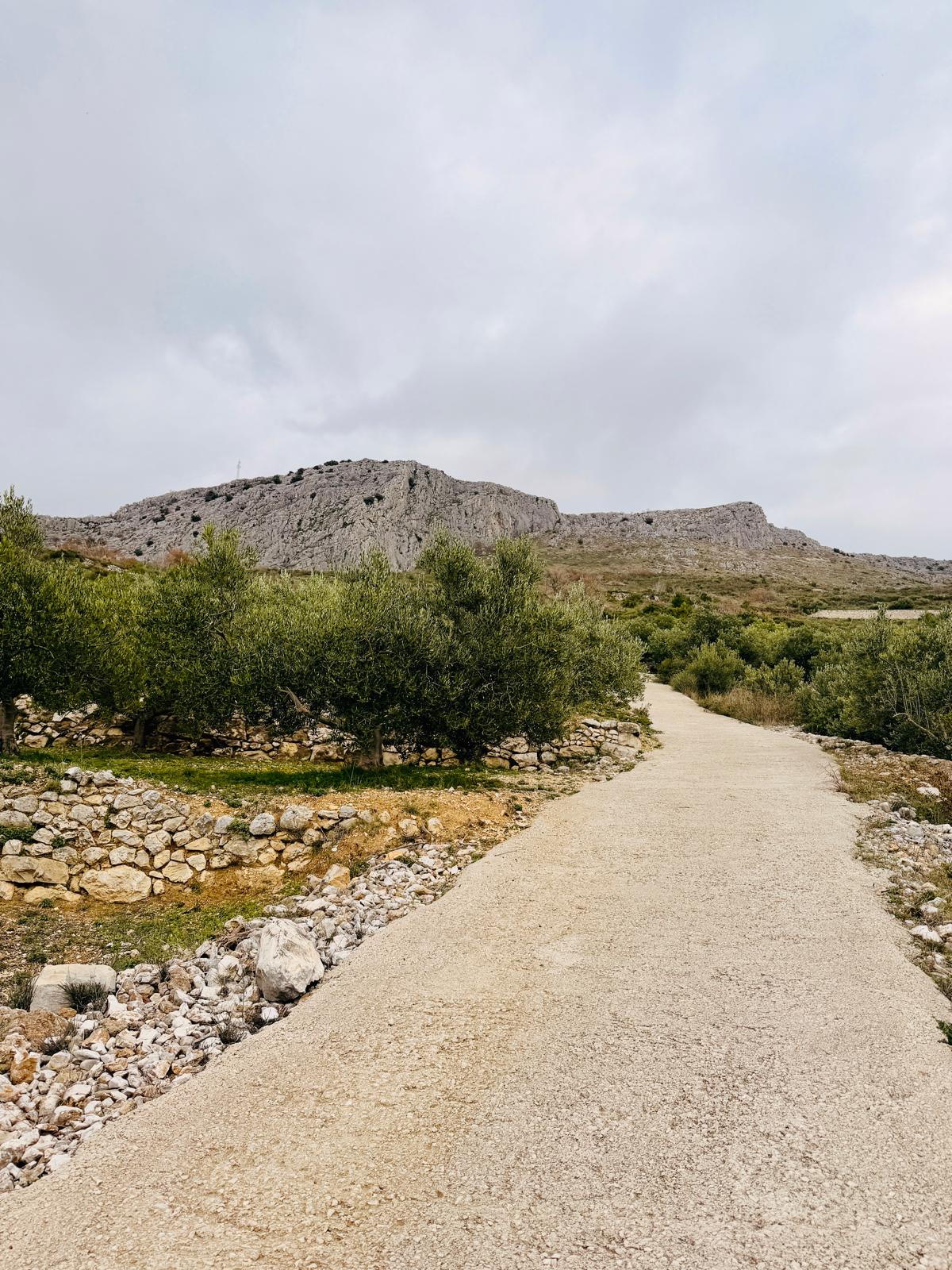
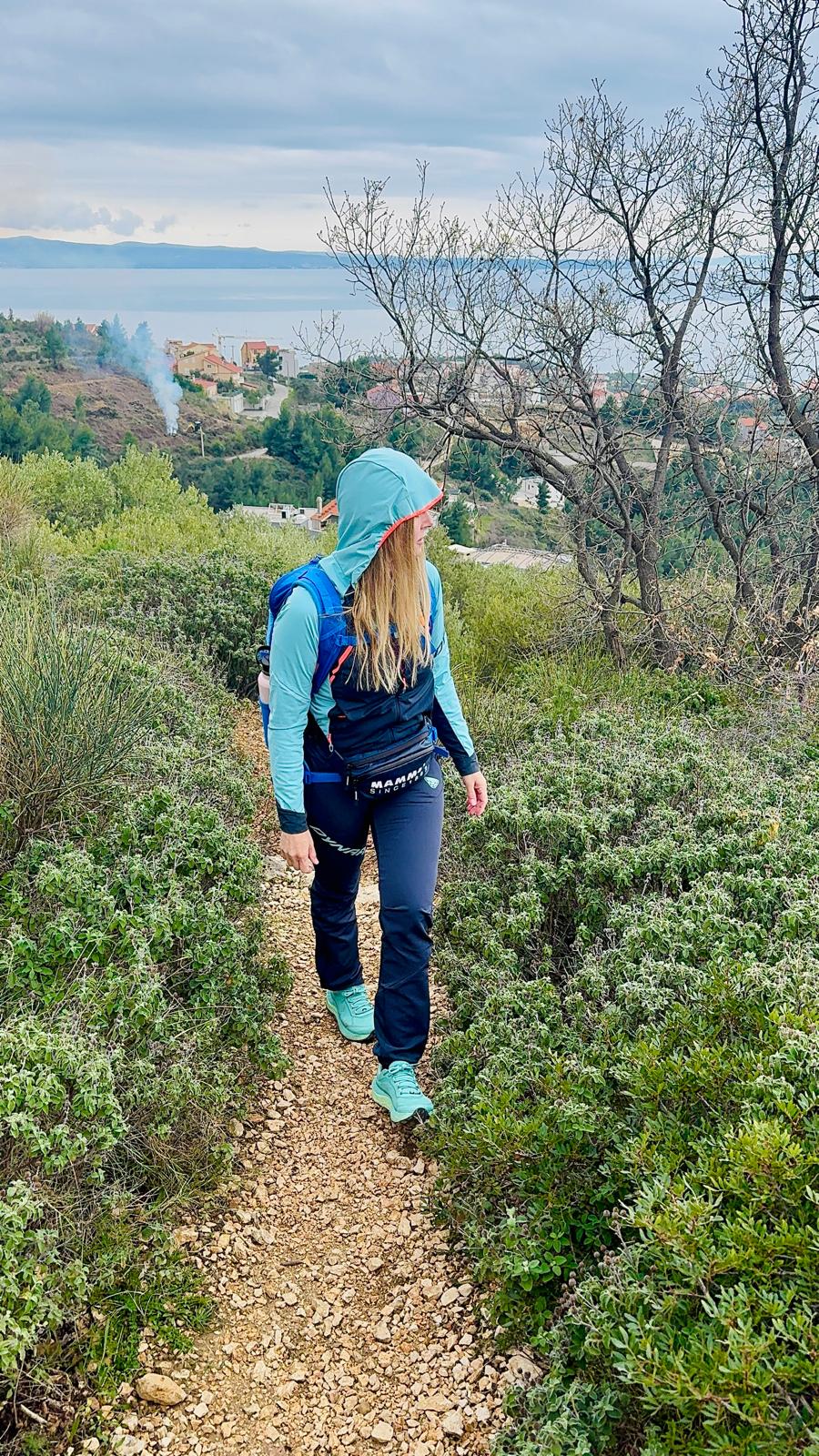
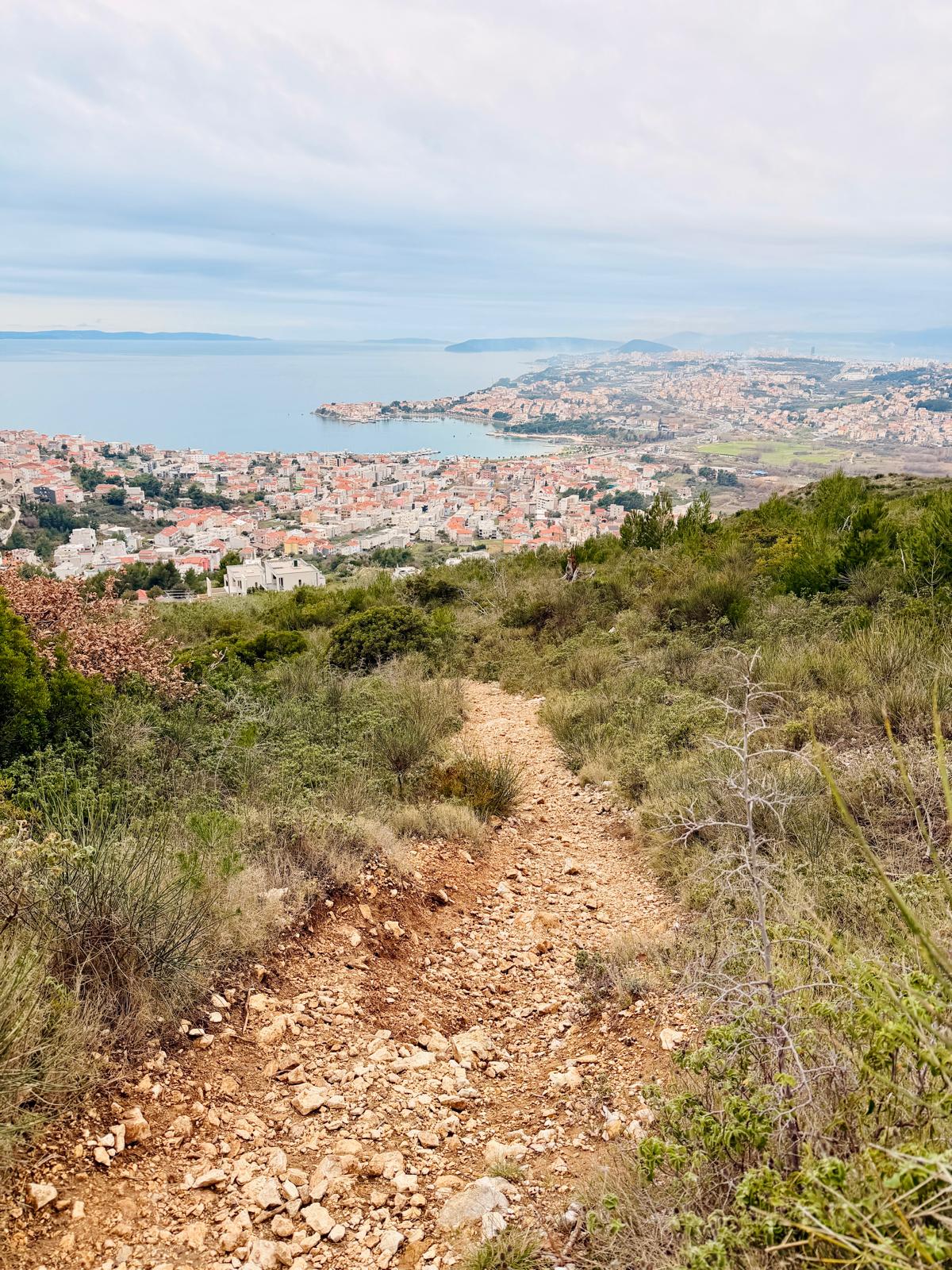


I climbed another 300 meters through open terrain until I found myself in a beautiful little forest. After about another 180 meters, I discovered a lovely spot to rest in an oak grove at the foot of the Perún massif. It’s a great place to relax and have a barbecue.


From here, it’s just a 100-meter steep climb to the start of the via ferrata. I’m finally here; I’ll get geared up and look forward to the climb ☺.

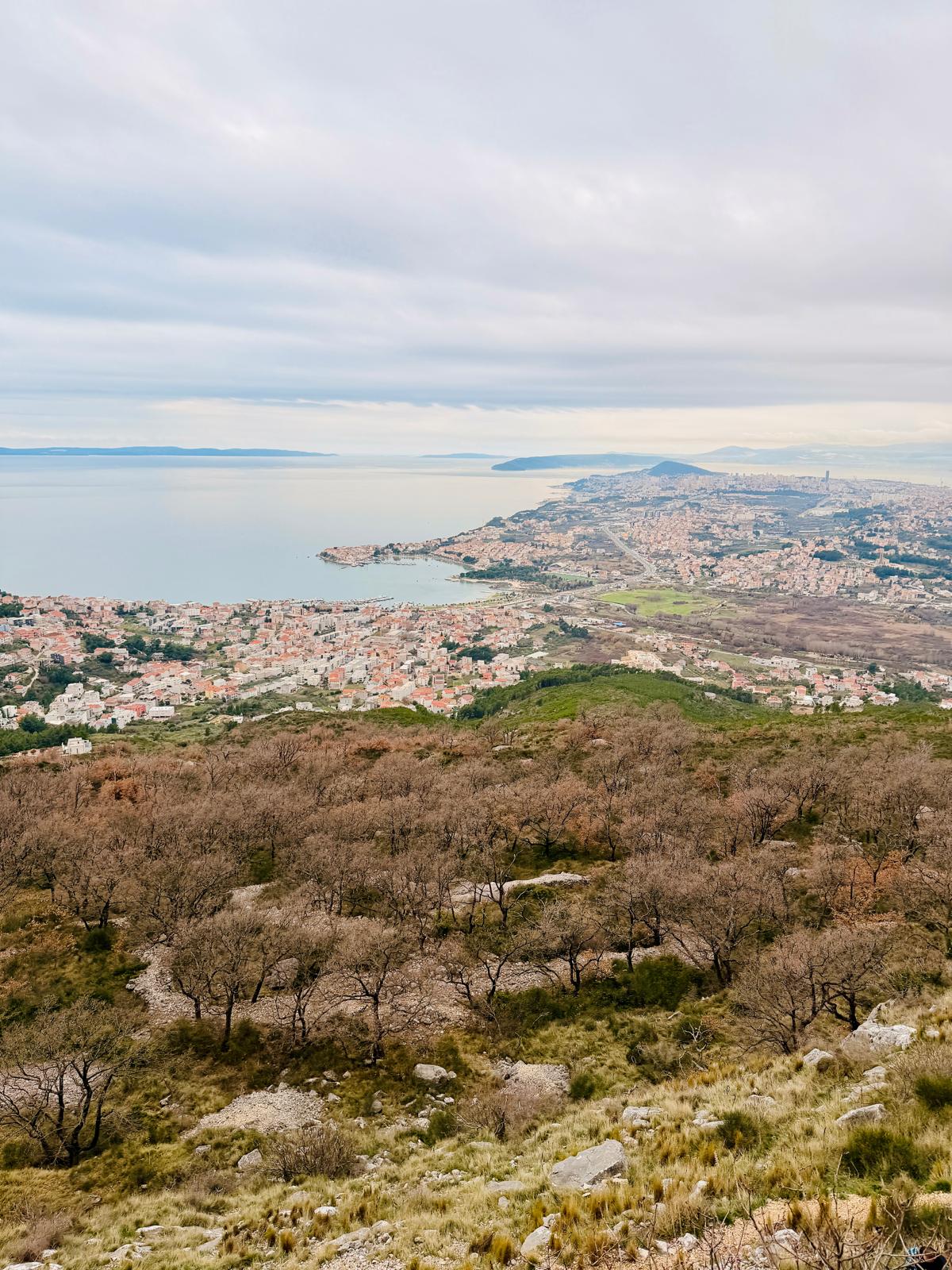


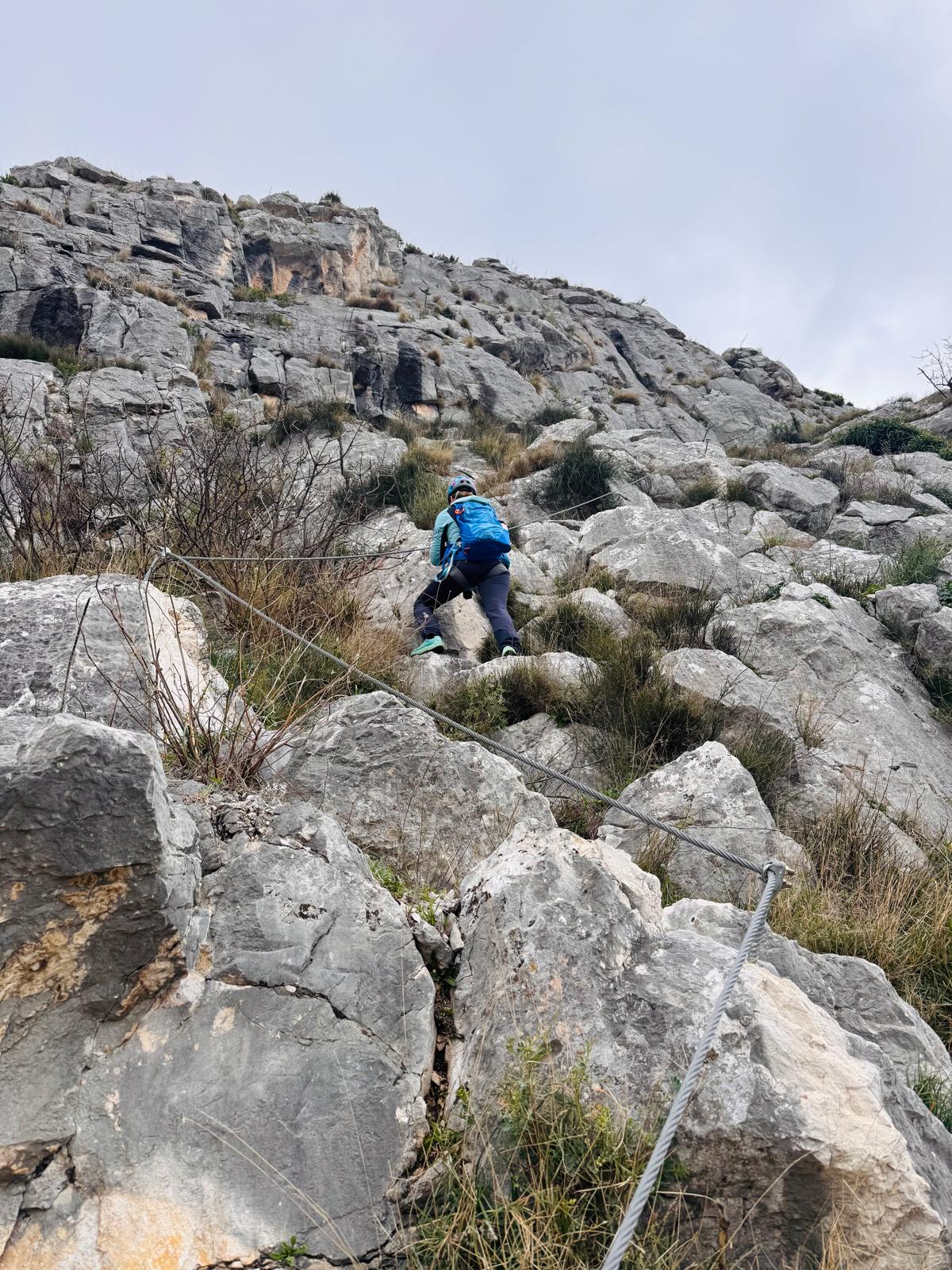
The via ferrata starts off gently with mostly walking sections. It starts to get a little more challenging about halfway through the route, where a steep climb up the rungs begins. But the views of the sea, Podstrana, and Split are well worth it!


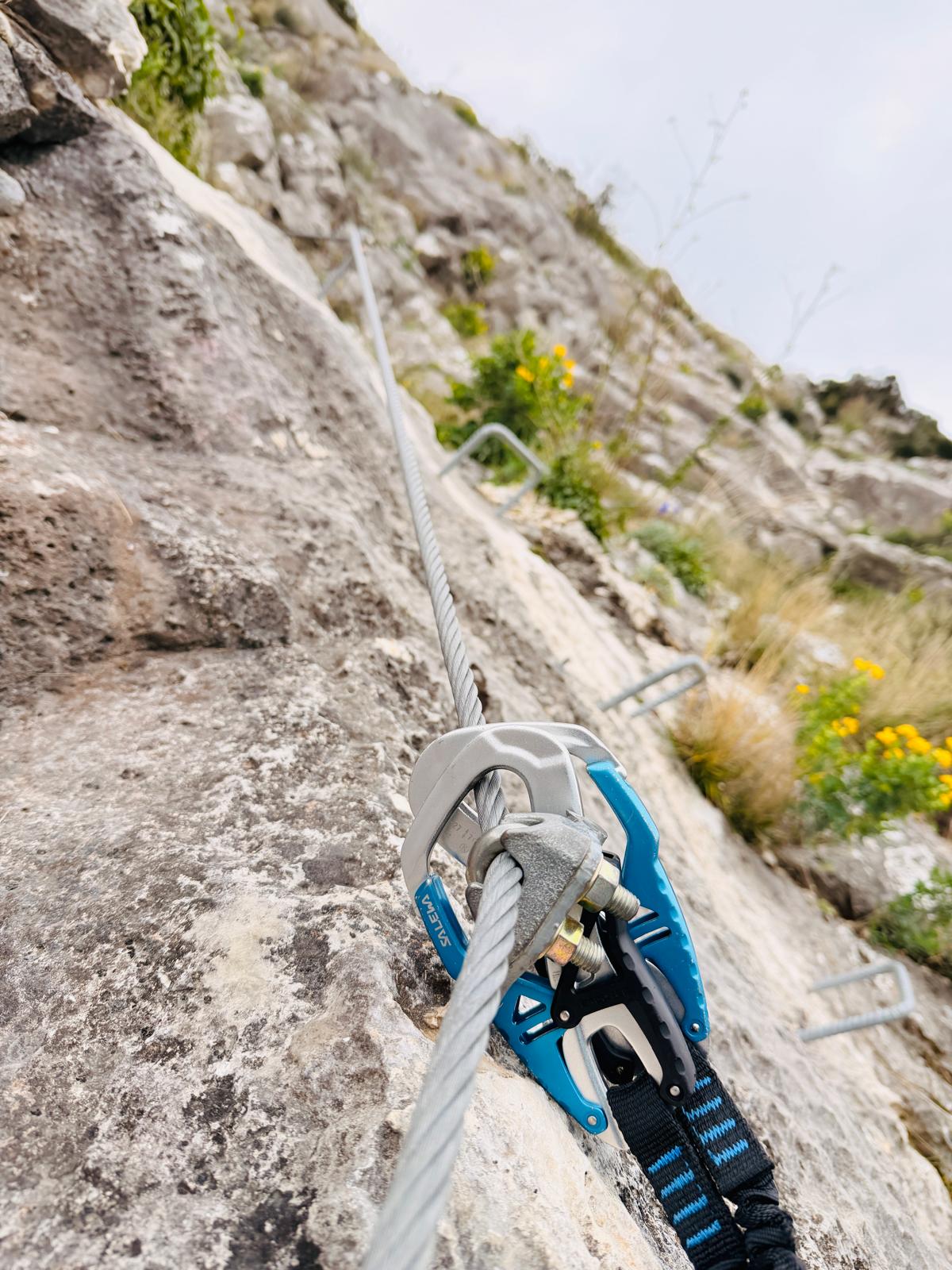

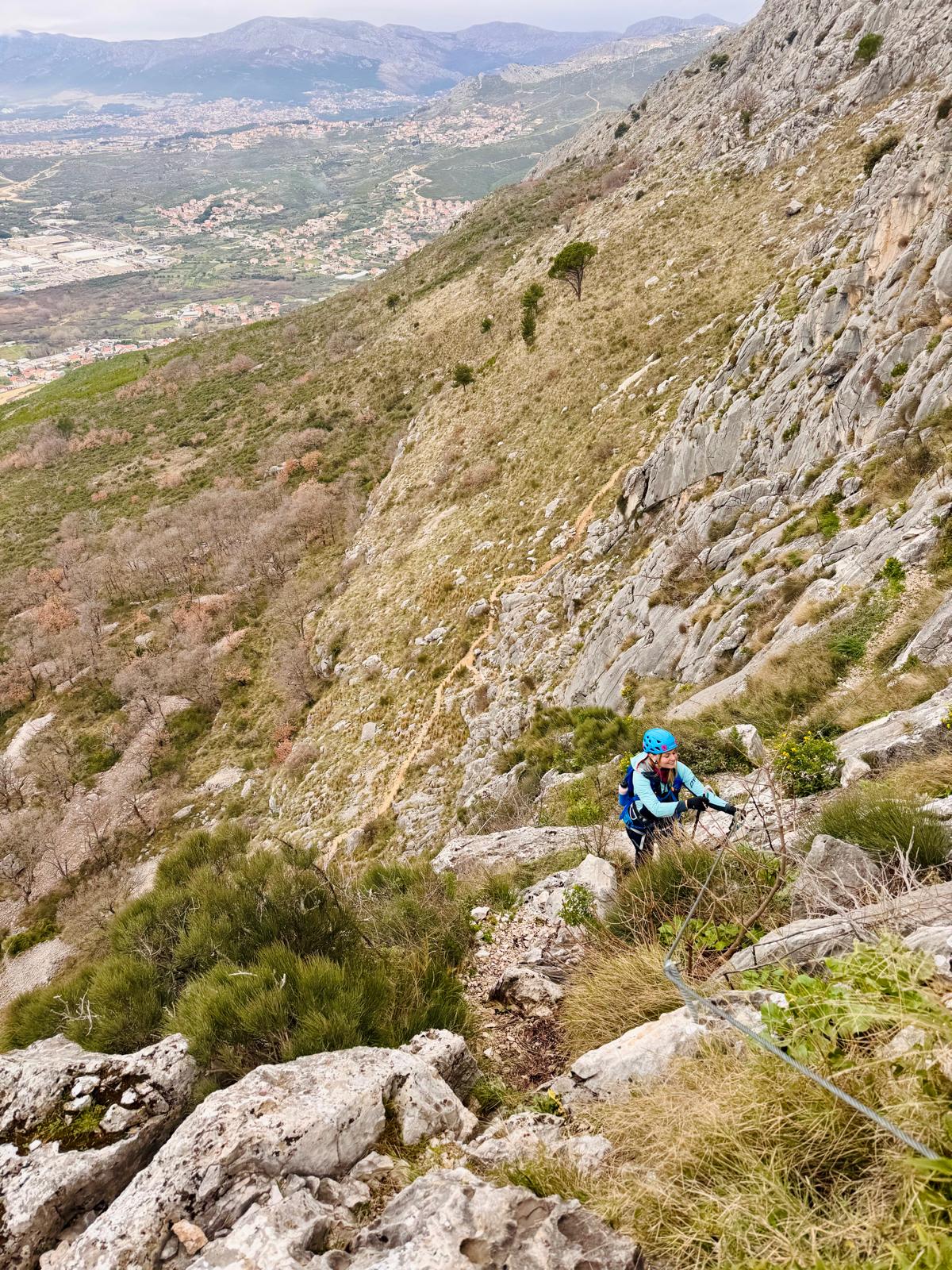

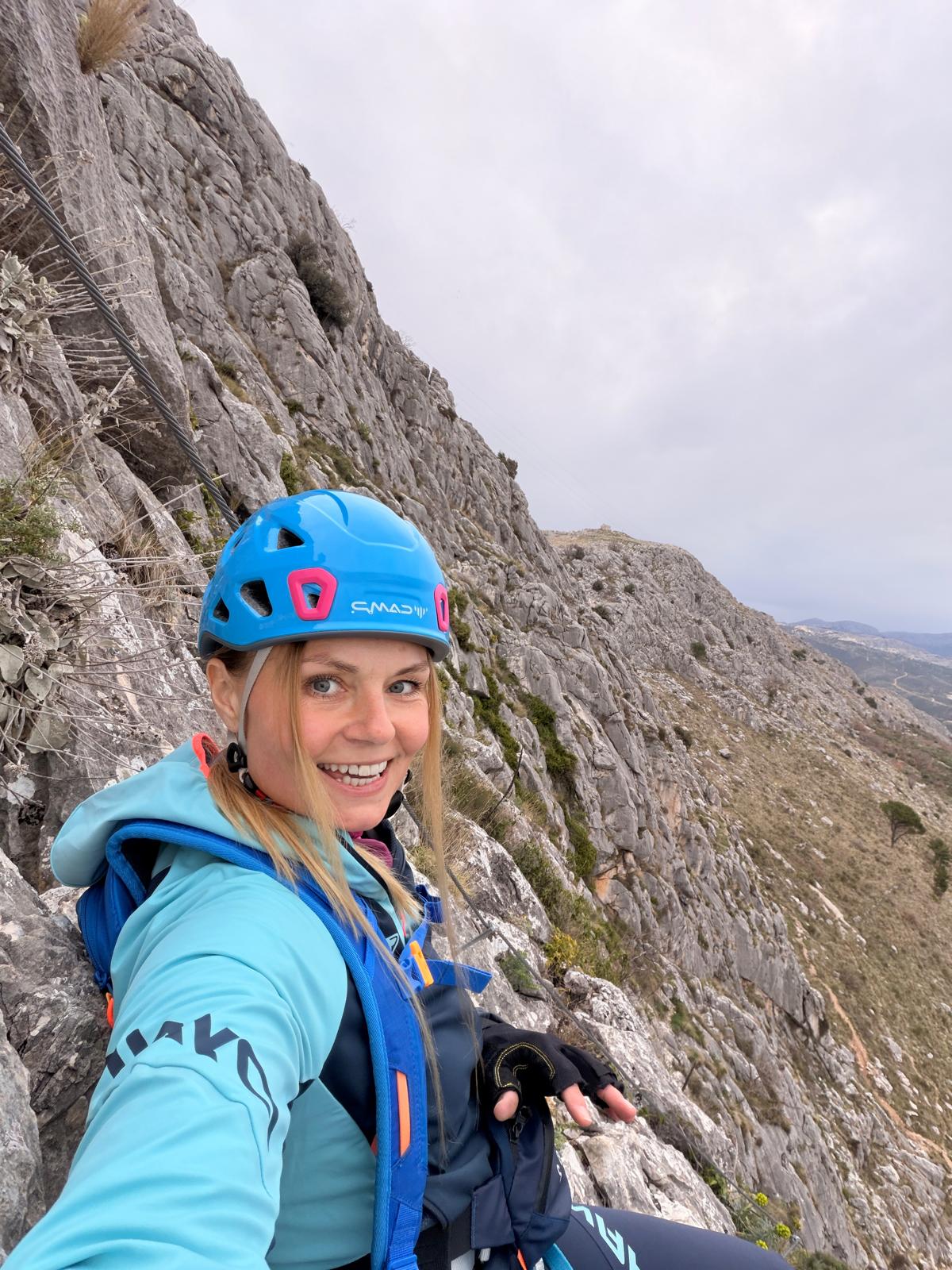

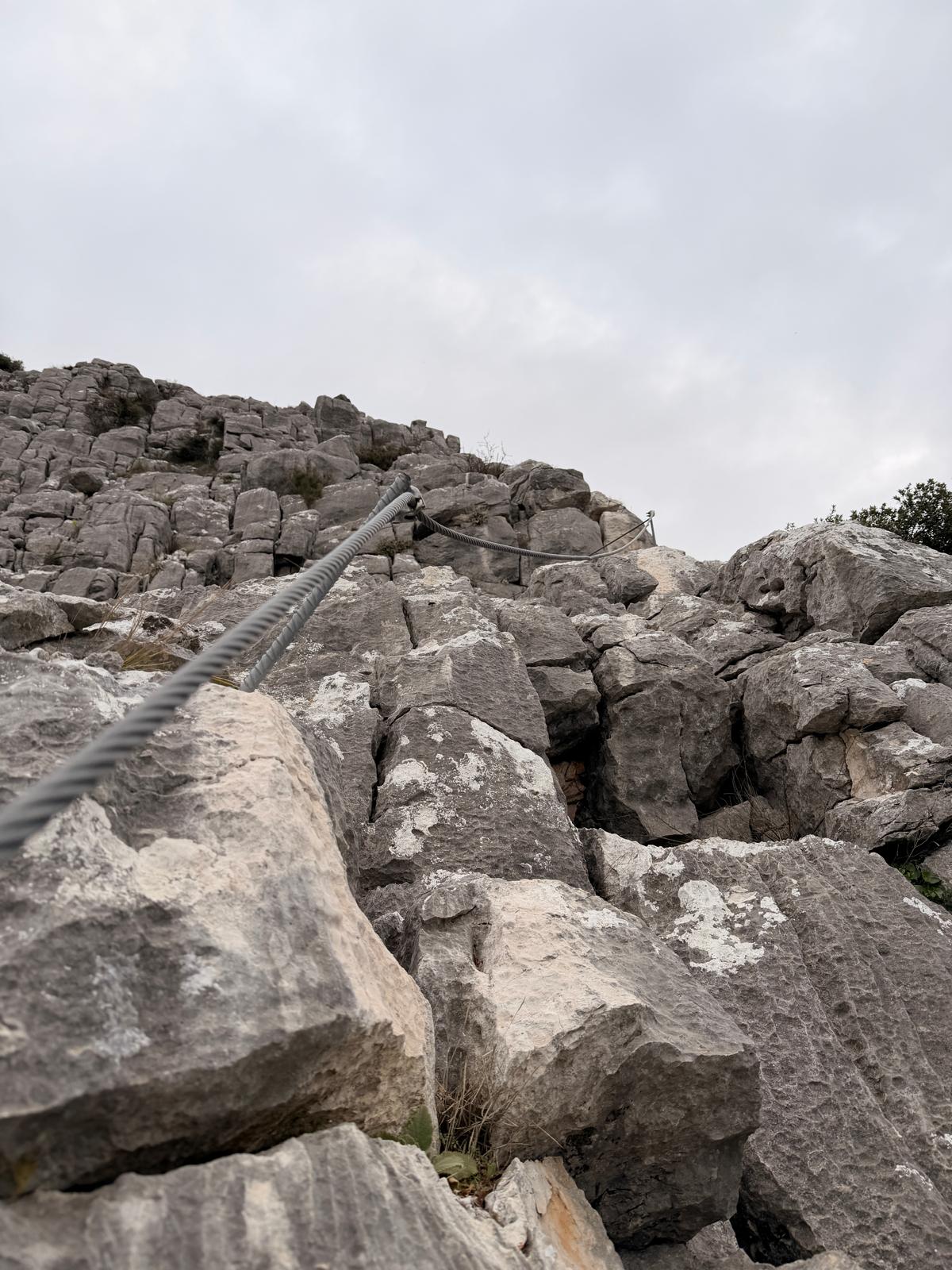
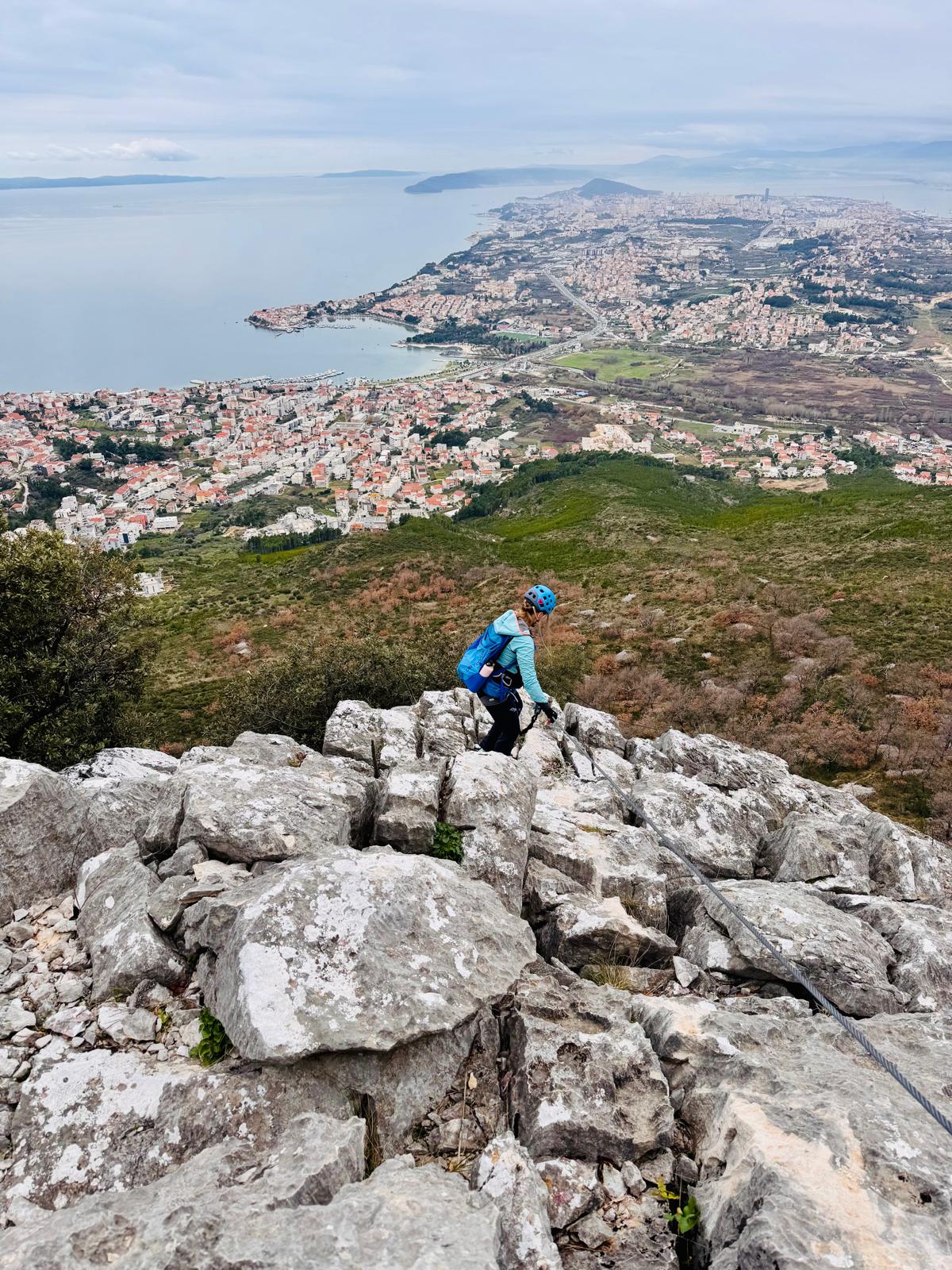


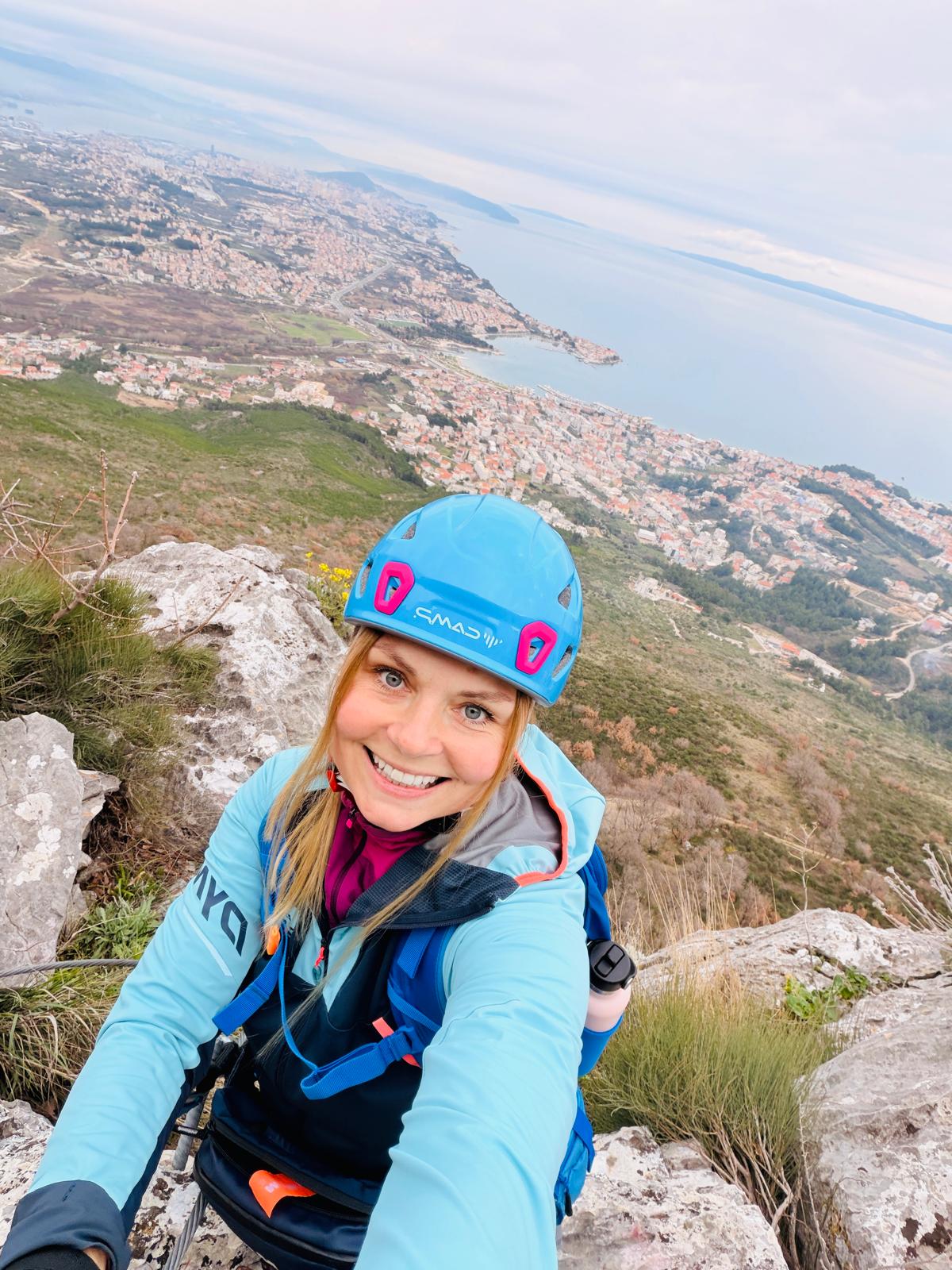


After about half an hour, I reached the end of the via ferrata and found myself at the summit of a massive rock formation. Just below the summit is a small hut, which is probably intended for emergency use.


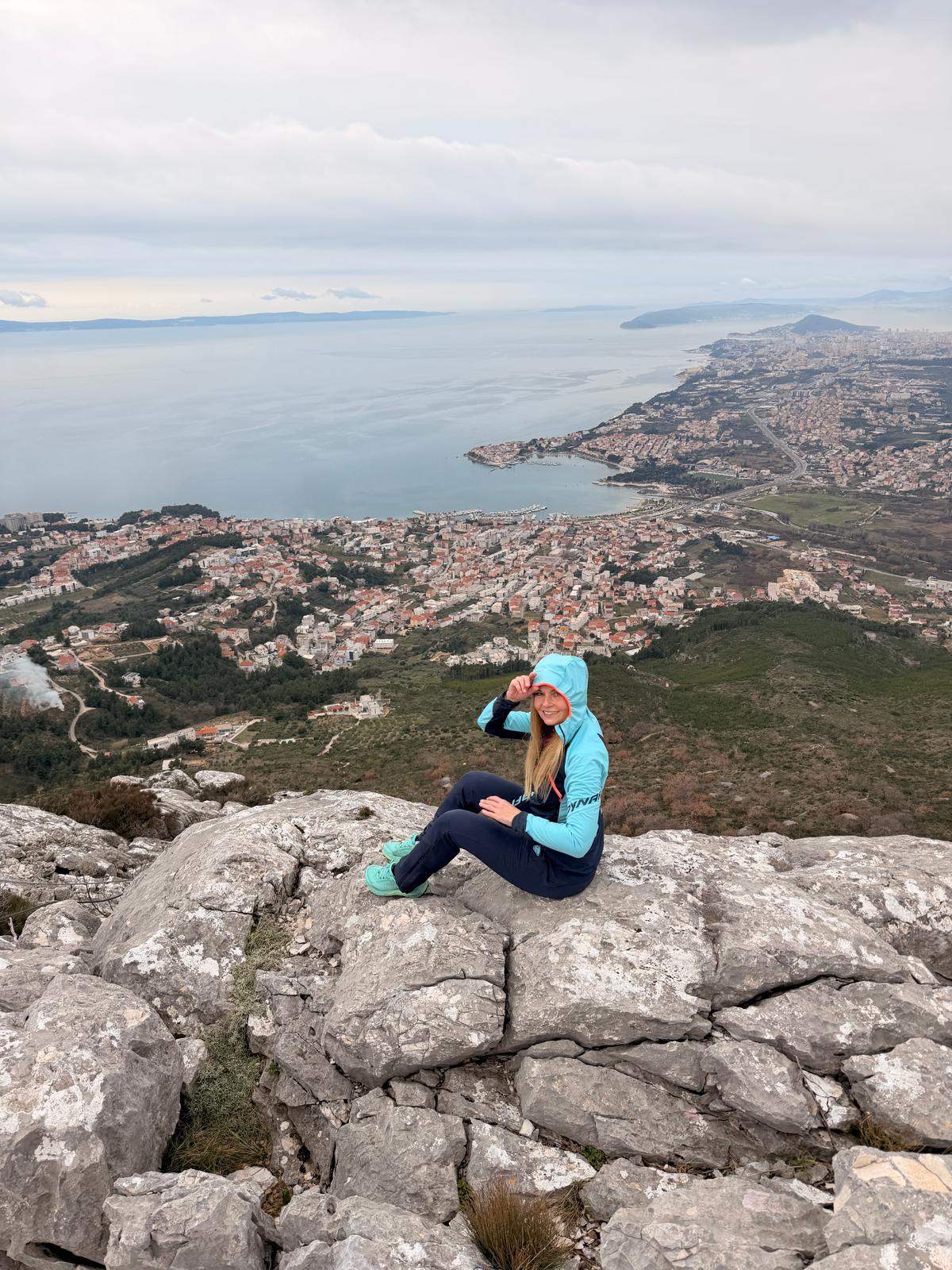
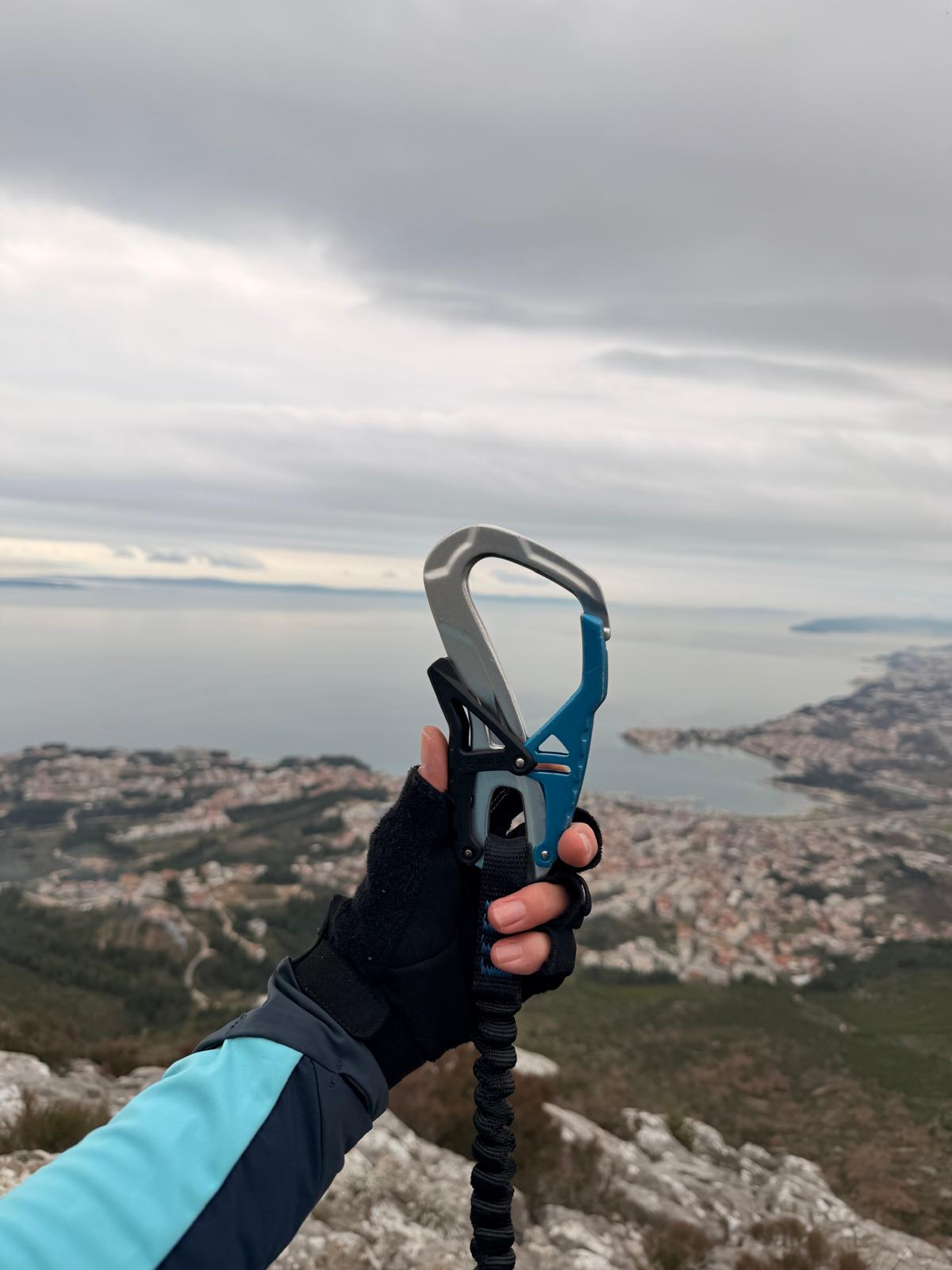

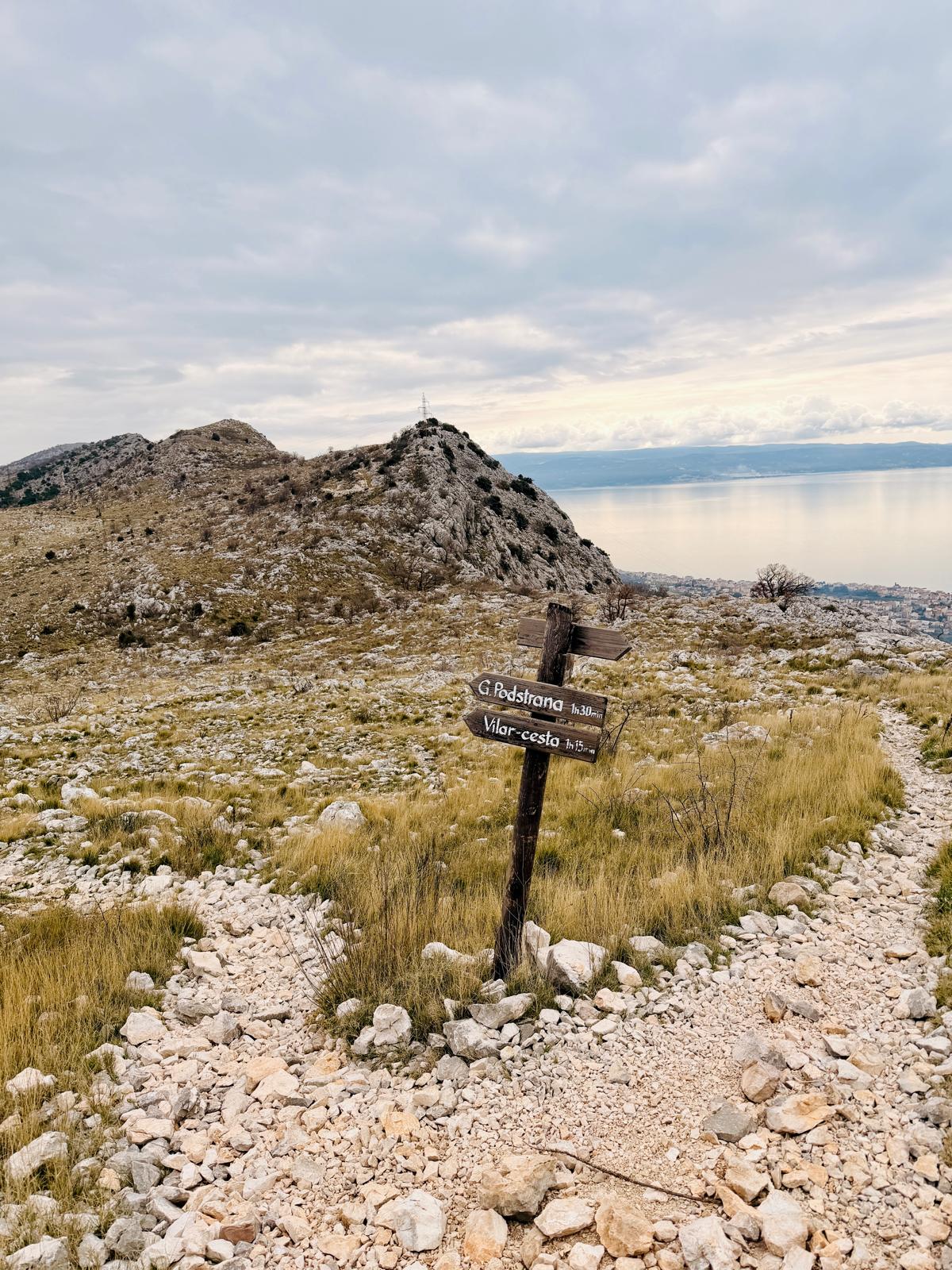
There are two routes down from the via ferrata, but the starting point is the same for both. You’ll need to walk about 100 meters over the rocks until you reach a spot where the single path splits into two. If you turn right, you’ll walk around the mountain massif for half a kilometer until you reach an oak grove. If you turn left, after 300 meters you will descend to an inner mountain plateau crossed by the Vilar–Perunsko Peak hiking trail.
I headed to the left, as I wanted to experience the mysterious atmosphere of this hill, which was so important to our ancestors. I could see St. George’s Chapel from a distance.


This chapel is first mentioned in written sources in a 1397 inventory of the properties of the Archdiocese of Split, but it is believed to have been built much earlier. It is characterized by its rustic style, the simplicity of its exterior and interior, and its semicircular apse. During Ottoman rule, the chapel fell into disrepair, and in 1752 it was struck by lightning.


It is dedicated to St. George, the patron saint of Poljica, and was built on the site of a pre-Christian shrine where the Slavic god Perun was worshipped. This shrine was located within the grounds of the prehistoric hillfort of Duga Gomila.

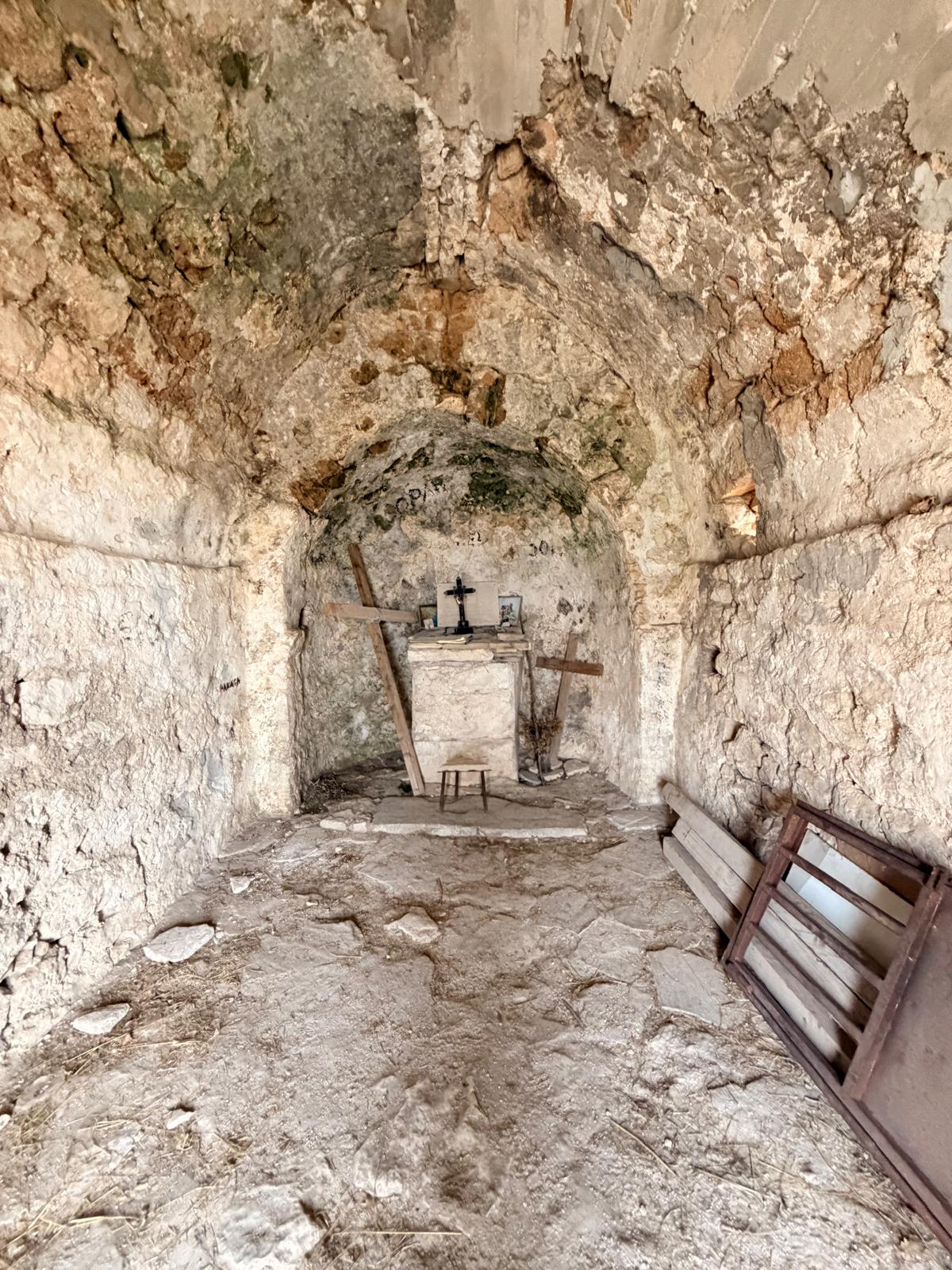

Every year on April 23, pilgrimage processions and a Mass are held here, accompanied by a blessing of the fields and the harvest. This tradition has very deep roots and has been observed for centuries.


It’s a beautiful place, and I’m so glad I got to visit. You could say that Perunsko Hill is where myth and faith meet. For centuries, Old Slavic customs and Christian traditions have intertwined here, which is why many view today’s celebration of St. George’s Day as a continuation of ancient rituals connected to nature, fertility, and the cycles of life. The celebration of St. George’s Day is an event that unites faith, nature, and cultural heritage.
And so, filled with impressions, I set off on my way down. A very steep path leads down from Perunsko Hill, where you have to be careful not to slip. After 700 meters, I was already in an oak grove, and after another kilometer, I was back at the car. I have to say that even though I was worried I’d get wet during the hike, the weather ended up surprising me, and the sun even smiled down on me (too bad it was only on the way down to the car).


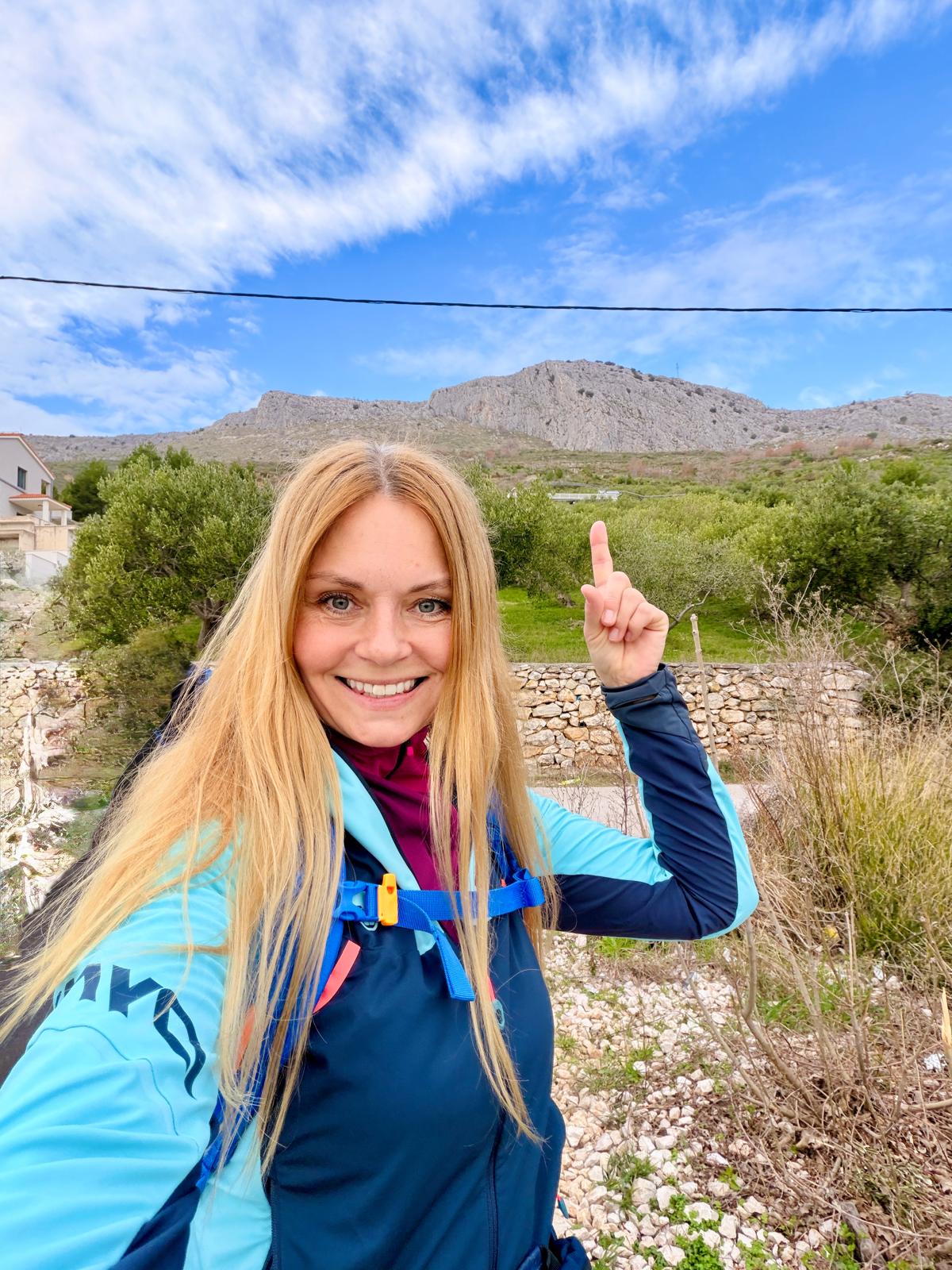
When I arrived at my accommodation, a cold beer was waiting for me—along with three insects, which I discovered on one of my legs while taking a shower. It really surprised me, since it was February and I was wearing long pants and long sleeves. So I realized that not only does the devil never sleep, but neither do insects! ☺

The entire loop is approximately 3.5 km long; you can choose to follow the via ferrata or take the route away from it, and you’ll be rewarded with a unique atmosphere and beautiful views.
If you decide to follow in my footsteps and need advice on accommodations, food, hiking trails, or other ways to spend your time on the Omiš or Makarska Riviera, please feel free to contact me via email at ajka@uzisibalkaninak.com, my Facebook page “Enjoy the Balkans differently” or Instagram.
P.S.: All photos and videos are protected by copyright 🙂