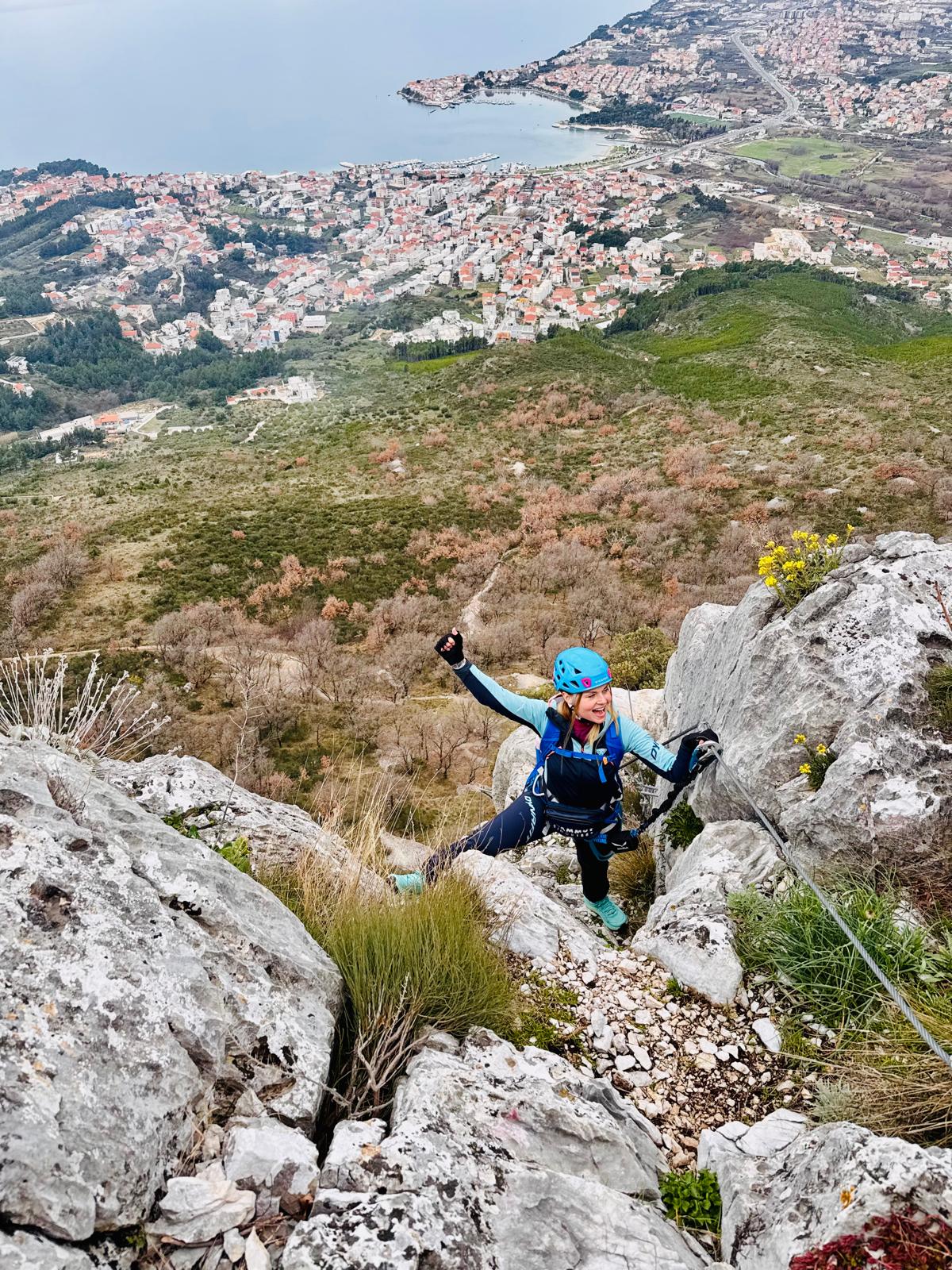
In this article, I’ll show you how to spend a day in the beautiful Albanian city of Shkodër. This article follows up on my piece about Rozafa Fortress.
This is what my day in February looked like (I hope this inspires you in some way 🙂 ).
*Rozafa Fortress*
You should set aside a few hours—or even a whole morning—to explore this historical gem. I won’t go into detail about the fortress here; I’ve already devoted an entire article to it.


*Xhamia e Plumbit or the Lead Mosque*
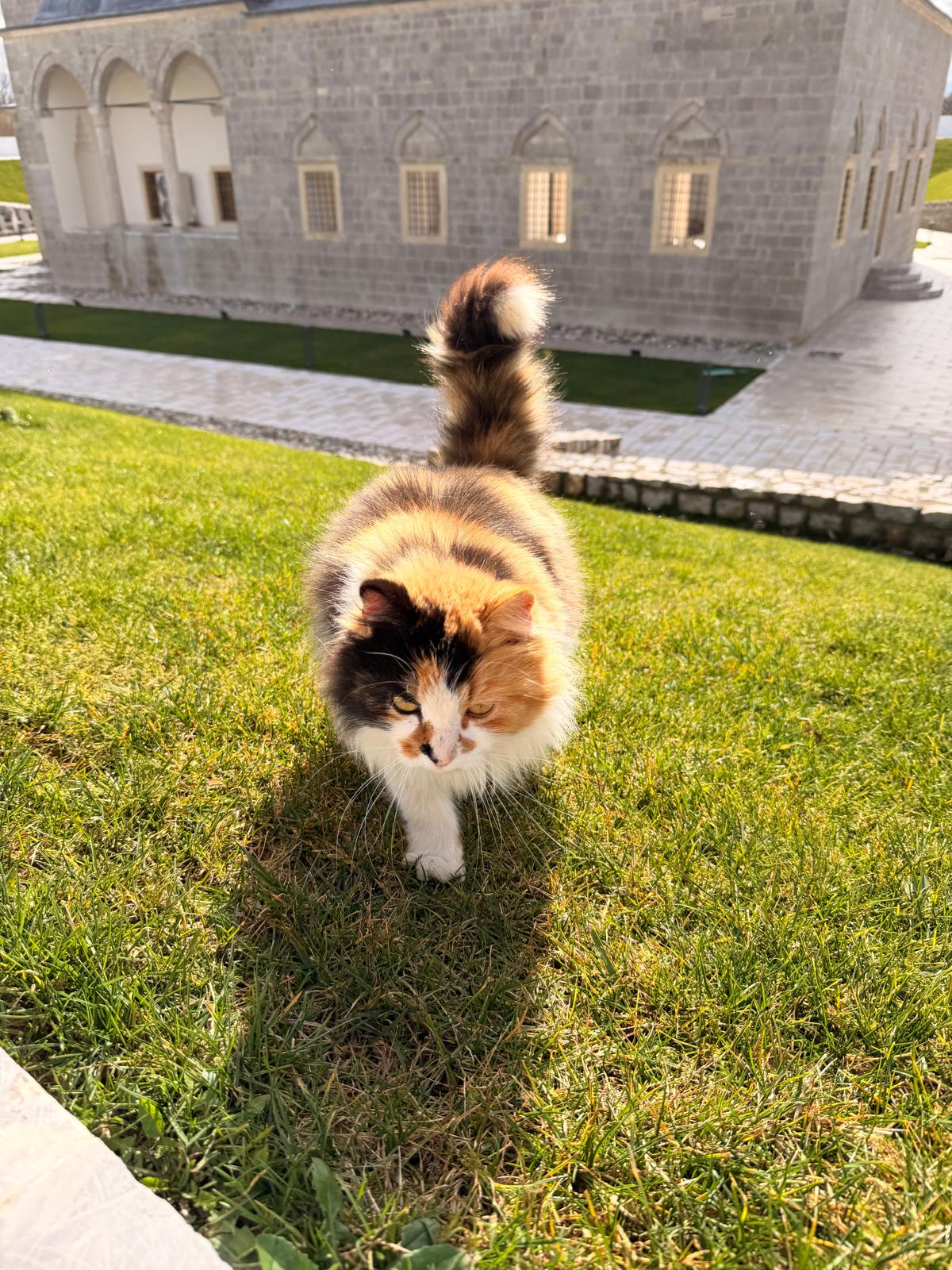
Right next to the hill where the Rozafa Fortress stands, in the Qafe district, stands the magnificent Lead Mosque (which also offers a great view from Rozafa). It takes about 4–5 minutes to drive here from the fortress. There is a parking lot next to the mosque where you can easily park, and then you can simply soak up the peaceful atmosphere emanating from this spiritual place.

The mosque was built between 1773 and 1774 by Mehmet Pasha Bushatli, the founder of the Bushatli dynasty. It is located near the southern entrance to the city of Shkodër and is one of the most historically significant mosques in Albania. Its name is associated with the domes, which were once covered in lead—a very rare feature among Albanian religious buildings. In 1948, it was designated a cultural monument.


During the 20th century, the building suffered serious damage, particularly during the period when the ban on religion was in effect from 1967 to 1990. It was not until the ban was lifted that the mosque resumed its religious activities.
Restoration work began in 2022 (with support from Turkey). It was rebuilt almost from the ground up due to extensive damage sustained over the past decades as a result of floods, which significantly compromised its structural integrity. The restoration took three years. Today, it is not only a place of worship but also a temple of faith, history, and culture in Albania. The Lead Mosque has even been ranked among the 50 most beautiful mosques in the world. In addition, it holds the title of the largest Ottoman mosque in Albania.


The building is constructed in the classic Ottoman style, featuring a central dome, four smaller domes, and an elegant minaret, while the surrounding area exudes tranquility and historical grandeur. It is clear that the sultan’s mosques in Istanbul served as inspiration. The entrance is through a spacious courtyard, and the inner courtyard is located in front of the prayer hall. Inside, visitors can admire interesting calligraphy and decorative motifs, as well as browse through the Quran in various languages.


I also really liked the area around the mosque; you can walk all around the grounds and take photos of the mosque from different angles. And of course, my friends – the cats are here too ☺.




*Ura-e-mesit*
After finishing my tour of the Lead Mosque, I drove to another interesting historical site called Ura-e-mesit. The drive took about 20 minutes (12 km).
It is one of the most beautiful bridges in Albania. Built in the second half of the 18th century, it is the largest surviving bridge from the Ottoman period in Albania, spanning the Kir River. Its construction took place in two phases. The first phase included the main arch with a clear span of 21.5 meters and four additional arches. Later, it became necessary to extend the bridge by adding 4 arches on the left side and 5 arches on the right.


When viewed from the side, the bridge draws attention not only for its length of 108 meters, but also for the elegance of its arches, which vary in size. Interestingly, there is almost no water flowing beneath it in the summer. But since I visited this landmark in February, I was able to admire the wild beauty of the Kir River in all its glory.


And unlike the Lead Mosque, which was dominated by cats, this bridge was instead occupied by a “pack” of friendly dogs ☺.
*Downtown Shkodër*
I was really looking forward to getting to the city center, since I was already pretty hungry. I managed to satisfy my hunger with a very tasty lunch at the Sofra restaurant on the main promenade. And now, on to the city center ☺ .


The main street is called Rruga Kole Idromeno. It begins at the intersection of this street and Bulevardi Skenderbeu, and right at its start, you’ll be struck by a statue of Mother Teresa, whom, despite having been born in what is now the capital of Macedonia—Skopje—Albanian Catholics consider “their own” (since she was born into an Albanian family).

To some, Rruga Kole Idromeno may be just a promenade lined with shops and restaurants. To me, it is also a symbol of religious tolerance, as within a very small area you can find a mosque, a Catholic church, and an Orthodox cathedral.
I’ll start with the mosque—Xhamia Ebu Beker. Also known as the Grand Mosque, it was built between 1994 and 1995 and is now the main mosque in the city of Shkodër. Its construction was financed by the Saudi businessman Sheikh Zamil Abdullah Al Zamil. It is named after Abu Bakr—the first caliph after the Prophet Muhammad. The mosque was renovated in 2008.


It can accommodate 1,300 worshippers; the two minarets are over 41 meters tall, and the central dome reaches a height of 24 meters.
The Xhamia Ebu Beker stands on the site of the former Xhamia Fushe Celes, which was built during the Ottoman period. It was notable for having its own religious school—a madrasa. It was destroyed during the communist era in Albania.
Across from the mosque (behind the Colosseo Hotel) is the Franciscan Church, which is only a few hundred meters away.


The Franciscan community in Shkodër was established in 1861. Construction of the church began in 1878. Due to obstacles posed by the Ottoman authorities, completion was delayed until 1905. In 2007, the church tower and rear wing underwent restoration. There is also a monastery for Franciscan monks located here.
About 300 meters from the Franciscan Church and also from the Xhamia Ebu Bekera stands the Orthodox Cathedral of the Nativity of the Lord. It is a modern building—construction began in the late 20th century and was completed in the early 21st century. At first glance, its style resembles Byzantine architecture. The cathedral is part of the Albanian Orthodox Church. On July 11, 1992, part of the church and the altar were destroyed as a result of a terrorist attack.

And now, let’s head over to Idromeno Street, which is less than 350 meters long. Here you can admire the architecture, which is somewhat reminiscent of Italy, buy souvenirs, or enjoy a cup of coffee.


*Sunset at Lake Skadar*
And what could be more beautiful than ending the day with a glass of wine at sunset on the shores of Lake Skadar? Just head about 8 kilometers to the village of Shiroke. It’s a resort area with several lodging options, cafes, and restaurants. I won’t say any more—this post speaks for itself ☺.


I took a photo of this mosque on my way back to Montenegro, near the border.


If you decide to follow in my footsteps and need advice on accommodations, food, hiking trails, or other ways to spend your time around the Albanian city of Shkodër, feel free to contact me via email at ajka@uzisibalkaninak.com, my Facebook page “Enjoy the Balkans differently” or Instagram.

P.S.: All photos and videos are mine and are protected by copyright … 🙂